
Why First Nations justice is climate action

Climate action is often framed as new technology, big infrastructure, or future solutions. But in Australia, some of the most effective climate work has been happening for tens of thousands of years.
Across the continent, it’s already in motion – grounded in long-term knowledge, ongoing care, and a deep understanding of land and ecosystems.
First Nations custodianship, often described as caring for Country, is increasingly recognised not only for its cultural significance, but for the measurable environmental and climate outcomes it delivers.
“The planet’s ill health has largely come about because humans have forgotten their relationship and responsibility to Country. Imagine if we could tap into the way First Nations cultures focus on deep, holistic connections to the environment to help us rethink environmental and health policies.”
Understanding this work offers a broader view of what climate action can look like in practice, and how it connects to the systems – including financial systems – that shape environmental outcomes.
Caring for Country = sustainable land management
Caring for Country refers to a holistic approach to land and water management that recognises the interdependence of ecosystems, culture, and community. It encompasses practices such as cultural burning, biodiversity protection, water management and the restoration of degraded landscapes.
These practices are guided by knowledge systems developed over tens of thousands of years and adapted to specific local environments. Rather than isolating environmental factors, custodianship approaches land as a connected system. Soil health, vegetation, fire regimes, water cycles, and wildlife are managed together, with decisions informed by long-term observation and responsibility to future generations.
This holistic, systems-based approach is especially relevant in the context of climate change, where disruption to one part of an ecosystem often has cascading effects elsewhere.
Climate outcomes in practice
The environmental outcomes of First Nations custodianship can be observed, measured, and in many cases quantified.
Fire management provides one of the clearest examples. In northern Australia, strategic early dry season burning reduces the likelihood of large, high-intensity fires later in the year. These cooler burns limit fuel loads and prevent the conditions that lead to more severe fire events. Late dry season fires release significantly higher levels of greenhouse gases, therefore shifting the timing and intensity of burns has a direct impact on emissions. This approach now underpins dozens of registered carbon projects, generating Australian Carbon Credit Units (ACCUs) linked to verified emissions reductions.
Land management also contributes to carbon storage. Approaches that support vegetation recovery and soil health increase the amount of carbon stored in plant systems and in the ground, while improving overall ecosystem function. These outcomes are supported through carbon farming methodologies that provide a framework for measuring and verifying change over time.
Beyond emissions and carbon storage, custodianship strengthens ecosystem resilience. Indigenous-led cultural burning has been shown to improve soil health and ecological outcomes, contributing to more stable and adaptable landscapes. In a changing climate, this resilience is critical. Healthier ecosystems are better able to withstand extreme weather, recover from disturbance, and maintain biodiversity.
The scale of this work is significant. Indigenous Protected Areas now make up more than half of Australia’s National Reserve System, covering over 100 million hectares of land. Across these areas, Traditional Owners and ranger programs undertake ongoing land and sea management, combining cultural knowledge with contemporary conservation practices.
Investing in First Nations custodianship
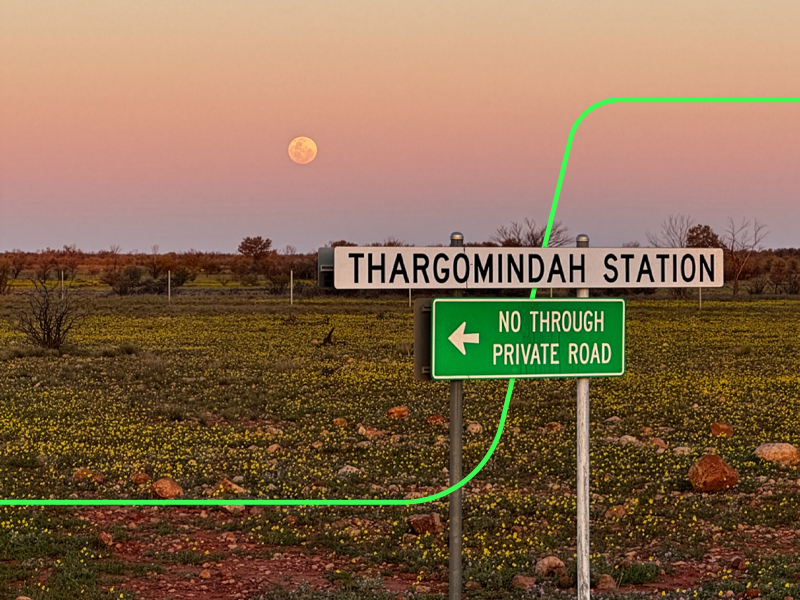
The return of Thargomindah Station to the custodianship of the Kullilli people in south-west Queensland provides a clear example of how your super can invest in First Nations custodianship and climate outcomes.
In 2023, the Kullilli Bulloo River Aboriginal Corporation (KBRAC) partnered with Conscious Investment Management (CIM) and Climate Friendly to acquire approximately 47,000 hectares of land at Thargomindah (a Kullilli word meaning ‘dust storm’). This enabled Traditional Owners to return to and manage Country on a site that has deep cultural significance for them, including an ancestral burial site.
The project uses a method known as Human-Induced Regeneration (HIR). Rather than planting new vegetation, this approach focuses on changing land management practices, such as reducing grazing pressure, to allow native ecosystems to recover naturally. At Thargomindah, this has supported the return of Mulga trees and native vegetation that had previously been suppressed.


As vegetation regenerates this landscape, biodiversity increases and carbon is drawn down and stored in the arid red soil. The project has now completed its first audit and generated its first Australian Carbon Credit Units (ACCU)s, marking an important milestone in translating land management into verified climate outcomes.
Over its lifetime, the HIR project at Thargomindah Station is projected to generate around 270,000 carbon credits over 25 years, equivalent to keeping 270,000 tonnes of CO2 out of the atmosphere.
Importantly, this model also supports long-term custodianship. The land is owned by Kullilli from the outset, and carbon revenue helps fund ongoing management, creating a structure that is both environmentally and economically sustainable.
“We will create intergenerational change and wealth for Kullilli people and for our babies into the future, which is something our generation or our parents’ generation didn’t have. The outcomes that our community derive are immeasurable. We want to make sure it’s long-lasting, sustainable and enduring for future generations.”
Thargomindah provides a clear example of regeneration — supporting Country to recover through changes in land management. Other projects take a different approach.
At Nyadinang Najung in New South Wales, a CIM partnership with Greening Australia, has seen more than 150,000 native trees already planted to restore an exhausted former sheep station in partnership with the Wolgalu people, under a shared formal commitment to healing and restoring the property.
At Kulliparu Downs on South Australia’s Eyre Peninsula, the Nauo and Wirangu people are contributing their knowledge to the planned planting of 900,000 native species as part of a large-scale restoration project, also delivered with CIM and Greening Australia.
At each of these properties, CIM’s investments have been structured to facilitate partnership between Traditional Owners and Greening Australia. This includes developing a cultural heritage plan for each site, with Traditional Owners contributing expertise in species selection, planting and access to the site, and everyone working together to ensure cultural heritage sites are appropriately maintained and cared for.
Together, these approaches reflect different ways of caring for Country. Regeneration focuses on creating the conditions for ecosystems to recover naturally, while restoration involves actively rebuilding landscapes through large-scale planting. Both contribute to carbon storage, biodiversity, and long-term ecosystem resilience.
Across projects supported through this approach, hundreds of thousands (eventually, millions) of native plants are being established to restore ecosystems and store carbon.
Helping Country recover is one of the most effective climate solutions we have.
How it generates income
These projects are made possible through a financing model that links environmental outcomes with long-term investment.
Capital is provided upfront for land acquisition and restoration costs. The land is owned and managed from the outset by either Traditional Owners (for example, the Kullilli Balloo people for the Thargomindah Station project) or values-aligned project partners (for example Greening Australia, a leading not-for-profit committed to restoring Australia’s landscapes and restoring biodiversity). Over time, the revenue generated through carbon credits is used to repay the initial capital and generate returns for investors.
This innovative financing model delivers sustainable environmental, cultural and financial outcomes for partners, and long-term returns for investors.
Investment in the Conscious Investment Management Impact Fund,has financed projects including Thargomindah Station, Nyadinang Najung, and Kulliparu Downs. Most Future Super investment options have exposure to these projects.
Investments of this kind require careful structuring. Where the project proponent is a Traditional Owner organisation (like KBRAC), for outcomes to be both meaningful and durable, capital needs to be aligned with First Nations governance and knowledge systems.
In these projects, investment is designed to support long-term custodianship by enabling land access, restoration and ongoing management, while leaving control and decision-making with the Traditional Owners or project partners.
The role of your super
Superannuation is just about the largest pool of capital in Australia, and its influence extends far beyond individual retirement outcomes. Investment decisions shape industries, land use, and the allocation of resources across the economy.
When structured appropriately, investment can support First Nations-led land management by enabling return to Country, long-term stewardship, and projects that deliver measurable climate and biodiversity outcomes.
Effective investment in this space doesn’t have to redefine land management practices. Instead, it’s designed to support existing knowledge systems and governance structures, giving communities and not-for-profit organisations the resources to continue and expand their work on their own terms.
The Thargomindah Station investment shows this working in practice. Carbon markets provide ongoing revenue, while investment capital means more land can be bought, restored and managed sustainably over the long term.
The climate action jigsaw
Expanding the definition of climate action changes how investors understand solutions and what they pay attention to. In Australia, First Nations custodianship is already delivering outcomes across emissions reduction, carbon storage, biodiversity protection, and ecosystem resilience. Together, they’re several pieces of a complex jigsaw of processes that can help combat climate change, where each piece of the puzzle strengthens the picture.
Supporting First Nations custodianship also offers a different perspective on the relationship between people, land, and the systems that support both. It highlights the value of existing knowledge and practices that have sustained environments over long periods of time, and their relevance in responding to very modern challenges.
Your super is part of this system. By choosing a sustainable super option, your super can help support large-scale environmental outcomes.
Understanding how custodianship helps the climate is one way to see that connection more clearly – and to recognise the role that your super can play in supporting a future that is both environmentally and socially sustainable.
Any advice by Future Super Services Pty Ltd is general advice under AFSL 482684 without considering your objectives, financial situation or needs. Before investing, you should read the relevant PDS including any incorporated information and TMD issued by Equity Trustees Superannuation Limited, and the FSG available at futuresuper.com.au and consider if this product is right for you.